
Discover how Fortune 500 companies and startups are leveraging AI to cut costs by 70%, automate millions of tasks, and boost revenue in 2025. Real success stories from Tesla, Netflix, and Microsoft that'll inspire your own AI journey.
Introduction: The Year AI Actually Started Paying for Itself
Here's the thing nobody talks about—AI stopped being a buzzword somewhere around March 2025. It became something far more dangerous: profitable.
I've been following tech trends for years, and honestly? This year felt different. While everyone was debating whether ChatGPT would change everything, actual companies were quietly running the numbers. And the results? They're honestly staggering.
We're not talking about incremental improvements anymore. We're talking about Microsoft seeing ChatGPT Enterprise adoption grow by 8x, JPMorgan Chase saving 360,000 employee hours annually, and Tesla reducing assembly time by 60% through AI-driven automation. These aren't theoretical projections from consultants—these are hard metrics from real organizations solving actual problems.
The global AI market just hit $757.58 billion in 2025, with projected growth to $3.68 trillion by 2034 (a 19.2% CAGR). That's not hype. That's money moving fast. And behind every billion-dollar figure are real stories of companies that took a leap of faith with AI and completely transformed their operations.
What fascinates me most is how different these wins are. Some companies used AI to save money. Others used it to create entirely new revenue streams. A few did something even rarer: they made their employees happier while simultaneously crushing their bottom line.
So let's dive into five stories that prove AI isn't just the future—it's already here, and it's actively reshaping how the best companies on the planet actually work.
1. Tesla's Lights-Out Factory: When Humans Become Optional (But Not Unnecessary)
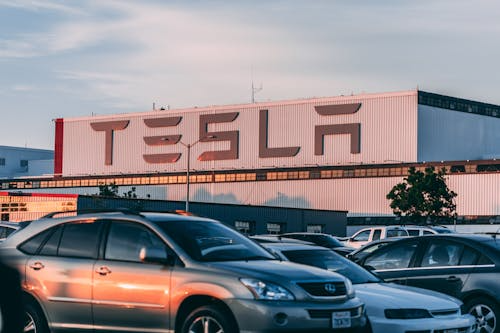
The Setup: Tesla's manufacturing ambitions have always been wild. Elon Musk famously called the factory "the machine that builds the machine." But here's what most people don't realize: that vision only works if AI handles the complexity humans physically can't.
The Transformation: By integrating computer vision AI quality control, sensor-driven robotic systems, and predictive maintenance algorithms throughout their assembly lines, Tesla managed something remarkable in 2025: reducing assembly time by 60% while simultaneously improving product quality.
Think about that figure for a second. Most industries would celebrate a 10-15% efficiency gain as a win. Tesla doubled that. Their AI systems aren't just monitoring production—they're learning from every single component, predicting failures before they happen, and adjusting line speeds in real-time based on demand forecasts.
The Human Element: Here's where it gets interesting. Tesla didn't fire 60% of their workforce. Instead, they redeployed people to roles that actually require judgment: quality assurance, troubleshooting, process innovation. The company essentially moved humans upstream, from doing repetitive assembly tasks to solving novel problems. That's a model that actually works long-term, unlike pure automation which creates obvious social friction.
Why It Matters for You: If you're worried automation will make your job obsolete, Tesla's story offers hope—but only if your industry invests in retraining. The companies winning with AI right now aren't replacing people; they're upgrading them.
2. Netflix's Recommendation Engine: When Good Enough Isn't Good Enough

The Challenge: Here's an uncomfortable truth about Netflix: back in 2020, their recommendation system was already pretty good. It was driving engagement. People watched shows. But Netflix execs realized something crucial—good wasn't scaling anymore. They needed exceptional.
The AI Breakthrough: Netflix engineered a deep learning system using "taste vectors"—mathematical representations of individual viewing preferences—combined with real-time behavioral signals. The result? By 2025, 80% of streams originated from AI recommendations, and the company reported a 30% increase in listen time (averaged across platforms).
But here's the sophisticated part: Netflix's AI doesn't just recommend what you've watched before. It understands why you watched it—the mood, the time of day, the genre evolution. It spots micro-trends (like "dark comedies featuring millennials navigating breakups") that humans would take months to identify.
The Revenue Impact: That seemingly small 30% lift in engagement translates to hundreds of millions in subscriber retention. Why? Because people churn when they can't find anything worth watching. Netflix's AI essentially eliminated that pain point.
What Makes This a Success: Netflix proves that AI success isn't always about cutting costs. Sometimes it's about understanding your customer better than they understand themselves. That's the scariest—and most valuable—kind of competitive advantage.
3. JPMorgan Chase's Document Whisperer: How AI Frees Humans to Think

The Problem: JPMorgan Chase processes insane amounts of legal contracts, regulatory documents, and client agreements. Manually reviewing them? That's not analysis—that's just careful reading. It requires judgment, yes, but also tons of tedious document parsing first.
The Solution: JPMorgan built COiN (Contract Intelligence), an NLP-powered system that automatically extracts key terms, identifies risks, flags unusual clauses, and highlights compliance issues. The AI doesn't make final decisions—humans do. But it handles the grunt work first.
The Numbers: Over one year, COiN saved JPMorgan Chase 360,000 hours of legal work. Let that sink in. That's 43.6 years of full-time lawyer hours. Across thousands of deals, that's the difference between reviewing contracts in 2 weeks versus 6 months.
The Culture Shift: Here's what's fascinating: JPMorgan didn't lay off all their contract reviewers. Instead, lawyers now focus on strategy—negotiating better terms, identifying opportunities, structuring deals creatively. The work became more valuable, not less.
Why Companies Are Slow to Copy: Most organizations see automation as cost-cutting. JPMorgan saw it as capability expansion. They're basically saying: "We can now handle 10x the deal volume without hiring 10x the lawyers." That's a different mindset entirely.
4. Amazon's Warehouse Revolution: Robots That Learn from Each Other
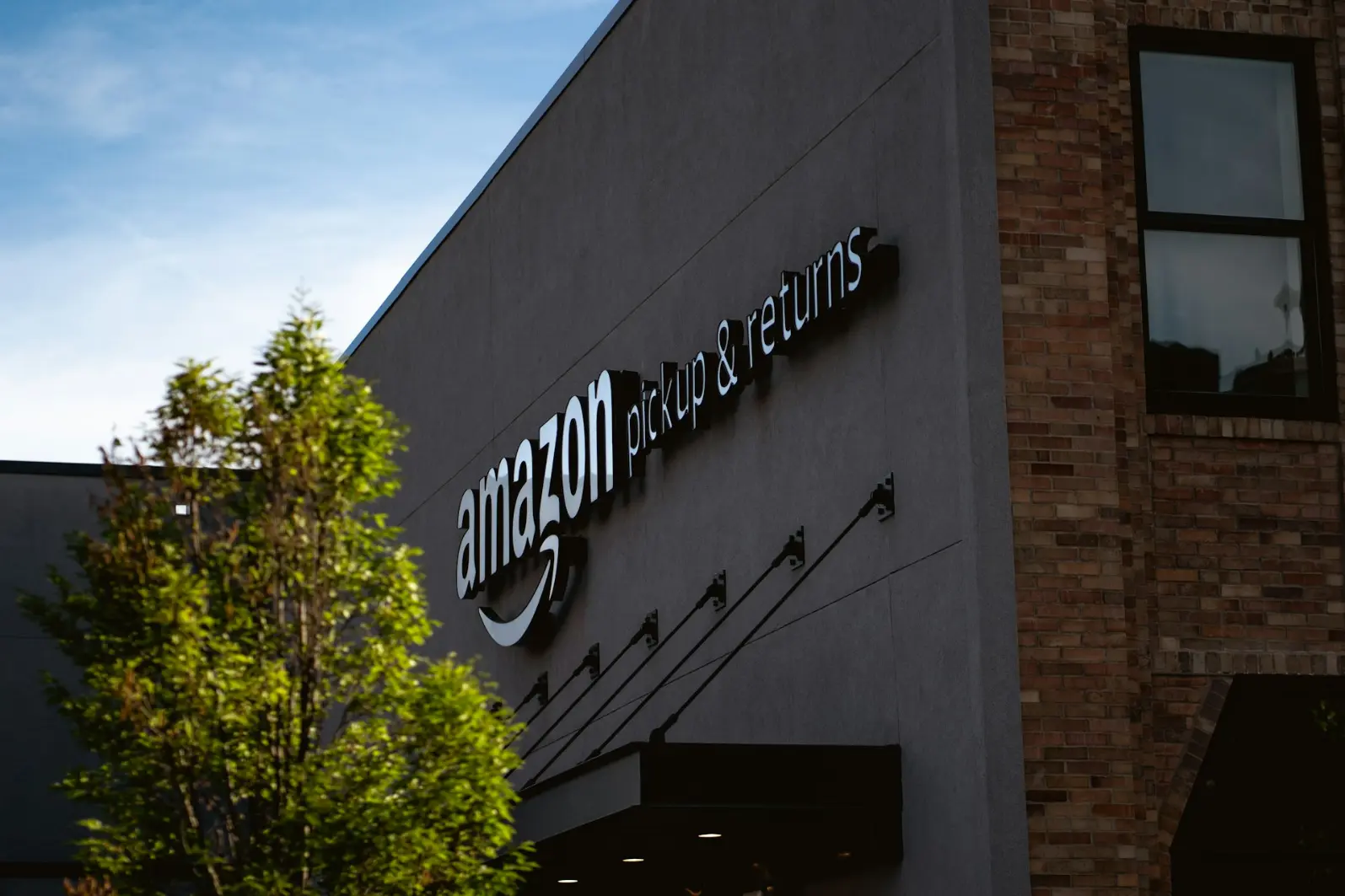
The Challenge: Amazon handles hundreds of millions of packages annually. Warehouse efficiency doesn't just affect profit margins—it affects whether same-day delivery is even possible.
The AI Breakthrough: Amazon's Kiva robot fleet uses machine learning algorithms to optimize routing, predict bottlenecks, and learn from peak seasonal demand. The system doesn't just respond to current orders—it anticipates future congestion and redistributes inventory accordingly.
The Financial Impact: Amazon achieved a 20% reduction in fulfillment costs through AI-driven logistics. For context, Amazon's fulfillment expense is literally tens of billions annually. A 20% cut is... honestly hard to overstate.
The Scaling Advantage: Here's what competitors miss: Amazon's AI system gets smarter as it scales. Every package processed, every route optimized, every seasonal pattern observed—it becomes training data that improves the entire network. New competitors can't copy this advantage because they don't have 20 years of warehouse data.
What This Teaches Us: Some AI advantages aren't about being first to the technology. They're about having the most data. Amazon's success here is partly because they've obsessively collected operational data for decades. If your company hasn't been doing that, you're already behind.
5. Microsoft 365 Copilot: The Quiet Revolution in How We Work

The Setup: Microsoft integrated generative AI (powered by OpenAI) directly into its productivity suite: Outlook, Word, Teams, Excel. Not as a separate tool, but as a native feature of apps billions of people use daily.
Early Results from Early Adopters:
Access Holdings (Nigerian fintech): Code writing dropped from 8 hours to 2 hours. Chatbot launches: 3 months → 10 days. Presentations: 6 hours → 45 minutes.
Toshiba: Deployed Copilot to 10,000 employees. Confirmed savings of 5.6 hours per month per employee.
Noventiq: Within 4 weeks, saved 989 hours on routine tasks—estimated value of ₹989K ($12K USD).
Why This Matters (and Why Everyone's Copying It): Copilot works because it doesn't ask you to change your behavior. You're already in Outlook, Word, Teams. The AI just... helps. It's integration that makes it powerful.
The Broader Implication: By end-of-year 2025, 78% of large organizations have implemented some form of AI tools. That's not early adoption anymore—that's market saturation. The question is no longer "Should we adopt AI?" It's "Why are our competitors getting better results with it than we are?"
The Common Thread: AI Isn't Magic—It's Multiplied Thinking

Here's what I notice across all five stories: none of these wins came from AI replacing human decision-making. They came from AI handling the machinery so humans could focus on strategy.
Tesla didn't remove humans; it redirected them. Netflix didn't ignore human taste; it amplified it at scale. JPMorgan didn't eliminate lawyers; it freed them from document reading. Amazon didn't replace warehouse managers; it gave them better data. Microsoft didn't automate away knowledge work; it accelerated the thinking part.
That's the secret nobody wants to admit: AI's real superpower is making good teams absurdly productive. Bad teams just get faster at being bad.
FAQ: Your Burning AI Success Questions
Q: Is AI adoption actually worth the investment, or is it still hype?
A: The 2025 data is clear—it's not hype anymore. Companies using AI are seeing 20-60% efficiency gains, 30%+ revenue uplifts, and faster time-to-market. But success requires changing processes, not just buying software. Microsoft's success came from redesigning workflows around Copilot, not just deploying it.
Q: Does AI kill jobs, or create them?
A: Based on what we're seeing, it transforms jobs. Tesla, JPMorgan, and Amazon aren't shrinking their workforces—they're repositioning humans toward higher-value work. The risk isn't automation; it's mismatch between the skills companies need and the skills workers have. Retraining is crucial.
Q: Which companies are AI-resistant? Should we worry?
A: Legacy industries like insurance, legal, and manufacturing were slowest to adopt AI, but that's changing fast. By 2026, laggards will face serious competitive pressure. If your company isn't experimenting with AI in 2025, it's already falling behind.
Q: How do I start my own AI success story?
A: Pick a problem that currently wastes your best people's time (not a problem that's already automated). Implement AI for that specific problem. Measure the before/after rigorously. Then scale what works. Netflix didn't revolutionize recommendations overnight—they iterated for years.
Q: Is AI going to be smarter than humans?
A: For specific tasks (math, pattern matching, language processing), AI's already there. For judgment—knowing which problem matters, when to break your own rules, what customer really needs—humans are still essential. The 2025 success stories prove humans + AI > humans alone or AI alone.
Q: What happens to the companies that ignore this?
A: Nothing immediate. But in 3-5 years, they'll face serious erosion. Their best people will leave to join AI-forward companies. Their costs will drift upward while competitors cut them. Their time-to-market will slow. It won't be dramatic—it'll be a slow fade into irrelevance.
Conclusion: Your Move
We're at an inflection point. The AI breakthroughs of 2024-2025 aren't just incremental improvements—they're capability shifts. Things that were impossible in 2022 are routine in 2025. Things that are routine now will be table-stakes by 2027.
The companies winning right now didn't wait for perfect AI. They experimented, measured, iterated, and scaled what worked. They took the messy, chaotic reality of AI in 2025 and turned it into competitive advantage.
The question isn't whether AI will matter to your business. The question is whether you'll be leading the transformation or reacting to it.
If you're looking to stay ahead of the curve, start small, measure obsessively, and stay humble about what AI can and can't do. The companies in this post didn't build their advantages overnight. But they did build them—and that's what separates success from hype.
Explore more at CyberDuniya.com for the latest AI, gadget reviews, and tech success stories reshaping the digital world.